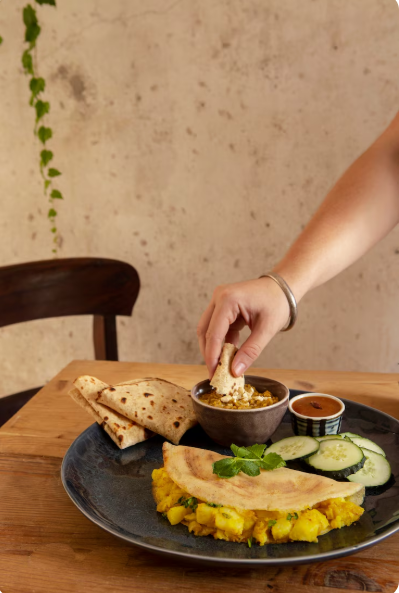

Begin your day with a healthy dose of millet dosa, the ideal low glycemic index (GI) breakfast for diabetes. This filling meal maintains stable blood sugar levels, making it a great option for those who wish to manage their health without compromising taste. Millet contains high fibre content and essential nutrients that help maintain digestive health and create energy that lasts throughout the day.
Millet dosa for diabetes is a tasty and versatile dish that is easy to make and full of goodness. You don’t need to be concerned about the blood sugar rise because millet’s slow-releasing carbohydrates keep the glucose levels steady. This nutritious breakfast is ideal for anyone who wants to eat a delicious meal without upsetting their health. Let us see how low GI foods play a vital role in diabetes and learn some recipes for millet dosa.
Millets and Glycemic Index
Millets are a great choice for those looking to manage their blood sugar, as they have a low glycemic index (GI). They are digested and absorbed slowly, which results in a slow increase in blood sugar, making them perfect for patients with diabetes. Millets usually possess a low GI value, which keeps glucose levels constant throughout the day.
Unlike high GI foods that cause rapid fluctuations in blood sugar levels, millets provide steady energy and help maintain better blood sugar control. Consuming millet in your diet can also contribute to overall wellness since they are high in fibre, vitamins, and minerals. By opting for millet in place of high-GI foods, you can engage in a healthier, balanced diet while controlling your blood sugar levels.
Factors Affecting The Glycemic Index of Food
Several factors influence the glycemic index (GI) of foods, affecting how they impact blood sugar levels. Here are the key elements:
- Type of Sugar
All sugars are not equal in terms of their effect on blood sugar. GI is quite different from one sugar to another. For example, fructose’s GI is 23, whereas maltose’s is up to 105. The GI of a food is determined by the type of sugar it contains.
- Starch Structure
There are two molecules that constitute starch, such as amylose and amylopectin. Amylose breaks down more slowly, resulting in a lower GI, while amylopectin is rapidly digested, causing a higher GI. Foods rich in amylose generally have a lower glycemic index.
- Refinement and Processing
The more food is processed, the higher its glycemic index tends to be. Grinding and rolling are forms of processing that disrupt the starch structure, making it easier for the body to digest and absorb, which in turn raises the GI.
- Nutrient Composition
Adding fats or protein to a meal will reduce its glycemic response. The nutrients delay digestion, which subsequently prevents sudden surges in blood sugar after meals.
- Cooking Method
The method of cooking food also influences its GI. In general, the more prolonged the cooking time of food is, the more rapidly the sugars will be broken down and absorbed, elevating the GI. Foods with a shorter cooking time have a lower GI.
Millet Dosa Recipes
1. Barnyard Millet Dosa
Barnyard millet dosa is a healthy choice for a low GI breakfast for diabetics. It offers a nutritious, gluten-free substitute for the traditional rice dosa. The dosa is prepared to be both crispy and soft, making it perfect for pairing with chutneys or sambhar.
Ingredients
- 2 cups barnyard millet
- ½ cup urad dal (whole, white)
- ¼ teaspoon methi (fenugreek seeds, optional)
- Salt (to taste)
Instructions
- Soak millet, urad dal, and methi seeds individually for 3 hours.
- If preferred, refrigerate the soaked urad dal for an hour to prevent the mixie jar from heating up, ensuring a lighter batter.
- Grind the urad dal using a little water to get a thick, smooth consistency. Grind using ice-cold water.
- Grind the millet separately, pouring off most of the water. Add salt when grinding.
- Combine both batters in the bowl, cover, and let them ferment overnight.
- The batter after fermentation will be like a regular dosa batter.
- Add a small amount of water to the batter and spread it over a hot tawa.
- Cook the dosa with some ghee or oil until crispy, and serve hot with chutney.
2. Foxtail Millet Dosa Recipe
Foxtail millet dosa is a crispy and healthy diabetic-friendly Indian breakfast, making it an ideal choice for those on a gluten-free diet and individuals managing diabetes. It’s simple to prepare, and the dosas are light yet filling.
Ingredients
- 2 cups foxtail millet
- ½ cup urad dal
- 1 tbsp fenugreek seeds
- Water (for soaking and grinding)
- Salt (to taste)
- Ghee or oil (for cooking)
Instructions
- Wash the millet, urad dal, and methi seeds thoroughly, then soak them together for 6-8 hours or overnight.
- Remove the excess water and mix the soaked ingredients with fresh water to form a smooth mixture.
- Add salt and mix well, then pour the mixture into a bowl.
- Rinse the blender with the leftover water and add it to the mixture.
- Seal the bowl and let it sit in a warm area for 6-8 hours or overnight to ferment.
- After fermentation, the batter must be pourable and thick, like a normal dosa batter.
- Heat a tawa, pour a ladle of batter onto it, and spread it in a circular pattern.
- Pour oil or ghee over the dosa.
- Cook until the edges are raised, flip, and cook for 1 minute.
- Serve hot with your choice of chutney.
3. Pearl Millet Dosa Recipe
Pearl millet dosa (kambu dosa) offers a crispy texture and provides balanced nutrition, combining protein, carbohydrates, and minerals. It is ideal for individuals of all ages, including babies.
Ingredients
- 1 cup pearl millet
- 1 cup rice
- ½ cup urad dal
- Salt (to taste)
- Ghee or oil (for frying)
Instructions
- Rinse the urad dal and rice before soaking them separately in plenty of water for 4 hours.
- Rinse and soak the pearl millet for approximately 4 hours.
- Drain the water from the soaked urad dal, rice, and millet.
- Mix the urad dal with a small quantity of water into a fine batter.
- Add the rice and the millet to the blender and mix with a little water.
- The batter must be of smooth consistency, perfect for dosas.
- Pour the batter into a large container and cover it.
- Let it ferment for 4-8 hours, depending on the room temperature.
- After fermentation, mix in salt and adjust the batter to a pourable consistency.
- Heat a tawa, add oil or ghee, and spread the batter evenly to cook the dosa.
- Fry until crispy and golden. Serve with chutney or sambhar.
4. Little Millet Dosa Recipe
Little millet dosa provides a light, crispy texture and is ideal for a diabetic-friendly breakfast. It’s easy to make and a great gluten-free option for managing diabetes.
Ingredients
- 1½ cups saamai/kutki little millet
- ½ cup split urad dal
- 1 tsp fenugreek seeds
- Salt (to taste)
- Ghee or oil (as needed for cooking)
Instructions
- Place the urad dal and methi in a large bowl and soak for 4 hours. Soak the little millet in a separate bowl for 4 hours.
- Drain water from the millet and urad dal.
- Grind the urad dal and methi seeds along with a little water to make a smooth paste.
- Grind the soaked millet into a smooth paste and then combine it with the urad dal mixture.
- Mix in the salt and mix the batter thoroughly with your palms to promote fermentation.
- Cover the batter and then ferment it for 8 hours or longer when it is cold outside.
- Heat the tawa, pour a ladle of batter, and spread it thin.
- Add ghee or oil and cook until the dosa turns crispy.
- Serve the hot dosas with sambhar or chutney.
5. Kodo Millet Dosa
Kodo millet dosa is a healthy alternative that is simple to make and just right for anyone seeking a gluten-free and diabetic breakfast. The dosas become crispy and can be made either thin or thick, depending on your preference.
Ingredients
- 2 cups kodo millet (varagu)
- ½ cup urad dal
- 2 tbsp fenugreek seeds
- Salt (to taste)
- Ghee (for frying)
- Instructions
- Rinse and soak kodo millet and urad dal, then grind them with methi seeds into a smooth batter, adding water as needed.
- Drain the water from the urad dal, then grind it with fenugreek seeds into a fine batter, adding water as required.
- Drain the water from the Kodo millet, then grind it with a small amount of water into a smooth paste.
- Take both the batters together in a big vessel and add salt.
- Mix the batter thoroughly with your hands to enhance fermentation.
- Allow the batter to ferment in a warm area for 8-10 hours.
- Once fermented, the batter should be of pouring consistency.
- Heat a tawa, spread the batter to make thin or thick dosas, and cook with ghee until crispy.
- Flip the dosa and cook for 1 minute on each side.
- Serve with chutney or sambhar.
Healthy Morning with Low GI Millet Dosa!
Millet’s dosas offer a balanced, low-GI alternative for diabetes patients. With essential nutrients and fibre, millets maintain consistent blood sugar levels and provide sustained energy. Millet dosa can be a healthy and easy meal option, perfect to enhance your diet.
Millex makes you engage in all these advantages through our low glycemic breakfast foods. Our range of products includes Multi Millet Dosa Instant Mix, Sprouted Ragi Masala Dosa Mix, Ragi Idli Instant Mix, and other millet-based products. Shop from our online store today to relish tasty, healthier meals that are specifically tailored to aid in diabetes control.
